
Categories
Daily inspiration

Courageous Communication

Pre-wedding preps are full of conversations about flowers or wedding breakfasts, guest invites and seating plans, speeches and first dances. I’m not sure how many couples will sit down and ask each other the harder questions that are essential to their being successfully wed.

And yet, those are the conversations that truly shape a marriage.

How do we handle money together?

What does success mean or look like to you?

How much independence do you need?

What role will family play in our life, now and in the future?

How do you respond when you feel hurt?

These questions are more romantic than they seem…because if you are aligned on them – or even if you agree to disagree – they become the foundations for deeper love.

In my own marriage, some of the most difficult fractures grew quietly in the spaces we hadn’t examined closely enough. Not because we didn’t care but because we assumed love would smooth over differences.

It didn’t…it doesn’t!

Silence can feel peaceful in the early years, but later on, it just becomes distance.

Healthy couples learn to be courageous in their communication; they are curious rather than avoidant because they understand that disagreement is not dangerous. It is data. It reveals where alignment needs strengthening. Their ability to repair, adapt, and maintain is the bedrock of mutual respect and kindness.

One of the most beautiful things I witness as a celebrant is when couples speak honestly in their vows. Not just “you are my everything,” but:

“I promise to listen when we disagree.”

“I promise to tell the truth, even when it’s uncomfortable.”

That is intimacy.

The strength of a marriage is not measured by how little conflict it has but by how safely conflict can be navigated.

Avoided conversations do not disappear.

They wait.

And love deserves more than avoidance.

It deserves courage.

If you’re sitting together right now, navigating those big, honest conversations about your future, you’ve already started the real work of marriage. Love like that deserves a ceremony that honours your specific truth…no fluff, but real stuff.

Book a call with me to see how we can craft a ceremony that’s as courageous and intimate as the life you’re building together.
Categories
Daily inspiration

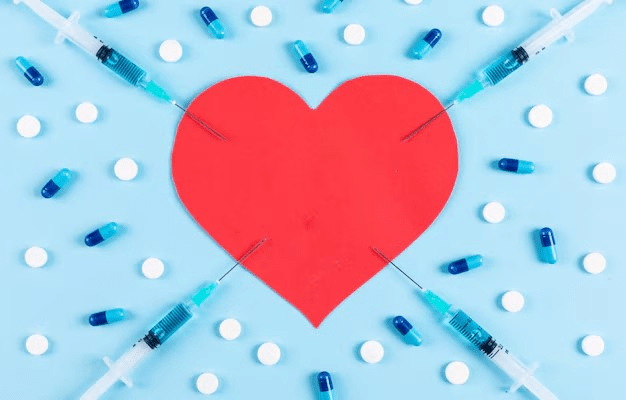
Love Is The Drug

Attraction is more than just a spark…it’s science and it’s rooted in biology, psychology, and chemistry. When we feel drawn to someone, there are several systems in our brain and body which are at work, creating what we perceive as love or desire.

Have you any real idea what’s really happening when your head spins and your heart feels like it’s going to burst out from it’s cage?

Biology and Survival

Attraction starts deep in our evolutionary history. Our ancestors needed to find healthy, strong mates to pass on their genes. Today, this instinct still shapes many of our preferences and so physical traits like facial symmetry, for example, are often linked to perceived health and fertility. This is why we might be drawn to people who look fit or display signs of good health—our biology is wired to seek out those who could help us reproduce successfully.

But attraction isn’t just physical. Traits like kindness, intelligence, and social status are also attractive because they suggest a potential partner will provide stability and support, important for survival in early human societies.

Chemistry

The phrase “chemistry” in romance is quite literal. When you meet someone you’re attracted to, your brain releases a cocktail of chemicals that affect how you feel. Dopamine, often called the “feel-good” neurotransmitter, floods your brain when you’re around someone you like, causing feelings of happiness and excitement. Meanwhile, adrenaline spikes your heart rate, making you feel more alert and energized. Serotonin, which controls mood and happiness, often drops, leading to obsessive thinking about the other person.

Oxytocin, known as the “love hormone,” is released during moments of physical intimacy like hugging or kissing. This hormone promotes bonding and emotional connection, deepening feelings of attachment.

It’s no wonder there are so many love songs linked to the idea that we’re intoxicated with love:

Addicted To Love – Robert Palmer

By The End Of The Night – Ellie Goulding

Can’t Feel My Face – The Weeknd

Dope – John Legend

Favorite Kind Of High – Kelly Clarkson

I Get Lifted – George McCrae

I Want A New Drug – Huey Lewis & the News

I’m Addicted – Madonna

Just Like A Pill – Pink

Love Is The Drug – Roxy Music

Never Be the Same – Camila Cabello

No Drug Like Me – Carly Rae Jepsen

Off My Face – Justin Bieber

Pusher Love Girl – Justin Timberlake

Seen You – Example

Sense – The Lightning Seeds

She’s So High – Blur

This Addiction – Alkaline Trio

Up – Erica Falls

Your Love Is My Drug – Kesha

Psychology

Our personal preferences are shaped by a mix of experience, culture, and social conditioning. For example, if you grew up in a culture that idealises certain body types or personalities, you might be more likely to find those traits attractive. Additionally, psychologists suggest that our relationship with our parents can subconsciously influence who we’re attracted to. People often seek out partners who remind them of their caregivers, either to recreate or avoid the dynamics they experienced growing up.

Humans are naturally drawn to people who are similar to them, both in appearance and personality. This is known as the “similarity-attraction effect.” We’re more likely to bond with someone who shares our values, interests, and background because it creates a sense of understanding and predictability. Familiarity also plays a role—studies show that we tend to feel more attracted to people we’ve encountered frequently, even if only in passing. This is why proximity often leads to deeper relationships.

A Complex Cocktail of Attraction

Attraction isn’t just one thing—it’s a blend of biology, chemistry, and psychology. While the initial spark might be fueled by evolutionary instincts and chemical reactions, the deeper connection often comes from shared values and emotional bonds. Understanding the science behind attraction doesn’t take away its magic; in fact, it highlights just how complex and fascinating love truly is.