I’ve never understood the concept, and certainly not the timing of dry January! And why not February, when there are less days? It’s an act of self hate, deprivation and flagellation!
This idea that last year, I deserved all the challenge and bad luck that came my way and that somehow, if I deprive myself of the things I love, for a whole month, I’ll become healthy and thin and detoxed and deserving of a brighter day, is cruel at best and insanely masochistic at worst. It smacks of the same mindset as, ‘I’ll be happy when I have that new ***** (insert whatever is your heart’s desire – car…house by the sea…holiday in Cuba).
Either of these ideas won’t help in the search for elusive happiness. In either scenario, I’m either too much or not enough and it’s only when I accept myself and love myself exactly as I am that I can be truly happy.
I know from my recent house pack up that I am excellent at gathering stuff I don’t really need and pretty good at shopping. And then I’m pretty good at putting whatever I’ve bought at the back of a cupboard and saying I’ll use it on a special occasion. I must have packed ten luxury scented indulgent candles that I’ve never lit! But in the past I’m also aware how, when I’ve shopped, I’ve looked for whatever it is to plug a gap for something missing in my life. “I could become enough…if I have the car, the house by the sea or the Cuban holiday.” But then something happens between the card payment and the car, my house – which is incidentally, only fifteen minutes from the sea, or the airport and I don’t quite get the high from it I have anticipated!
These decisions to have something in abundance or to force myself into appreciating its scarcity are not healthy! They are all promises of “someday when”. If I think to myself, “I’ll wear it when …” or “I’ll use it when …” or “I’ll be beautiful when…” and “I’ll be healthy when…” I am subconsciously saying I can only possibly be content when all criteria of my chocolate box life is met!
But I promise you that, with such a mindset, “someday when” isn’t coming! Ever! And I can be happy with or without these items on my bucket list!
Of course, when I’m trying to pursue a life goal such as developing my Celebrancy business or preparing to run a ten k, I can take advantage of a fresh new start. And January can certainly be that. Psychologists state that we can be more driven to tackle new goals at shared temporal breaks than at random times of the year; fresh start moments give us a boost of motivation by focusing our attention on what we want to achieve.
But I know that if my attention is focused on how bad my past behaviours have been, how my life choices made 2020 all the more difficult to manage, then the only way I can make the horrors of 2020 disappear is with more serious tough love and that’s dangerous – right now and in the future. I’ve been way too good at allowing my inner boot camp voice to shame me into doing things to myself that are abusive and unkind.
Shaming and punishing myself is not the way to successfully motivate positive changes. And so, I have assured myself that tonight I will pour myself that glass of Chateau-neuf, I will light the luxury candle, settle into a luxury bath and then have an earlyish night to get myself mentally ready to take the first step on my couch to ten k run…tomorrow!
May you awaken to the mystery of being here and enter the quiet immensity of your own presence. May you have joy and peace in the temple of your senses. May you receive great encouragement when new frontiers beckon. May you respond to the call of your gift and find the courage to follow its path. May the flame of anger free you from falsity. May warmth of heart keep your presence aflame and anxiety never linger about you. May your outer dignity mirror an inner dignity of your soul. May you take time to celebrate the quiet miracles that seek no attention. May you be consoled in the secret symmetry of your soul. May you experience each day as a sacred gift, woven around the heart of wonder.
And this was written by my son…who has these blessings in abundance!
Was 2020 really that bad??
Yes lots of really horrible stuff happened.
Whilst lots faced challenges, many of us got the chance to reconnect with people. No matter the distance, we embraced technology that allowed us to become closer.
Home became a staycation.
Monday afternoons became a Friday night (it’s always after 5 somewhere in the world!)
We experimented with new food from the leftovers of the fridge.
We took on all of those DIY jobs that we never “had time for.”
Everyone prioritised their daily exercise.
We appreciated those professions that we perhaps previously took for granted.
We appreciated everything we had.
Everyone learnt new ways to work remotely.
And so much more…
Rather than wishing death to 2020 make the most of what you learnt this year. It will serve you far better.
Were you planning a frivolous, festive gathering? Have your plans been thwarted by a cunning, mutating virus, a bumbling government, muck-spreading media or super-spreading protestors? The old proverb, ‘Christmas comes but once a year’ means we really could be tipped over a precipice of melancholy when the ghost of Christmas future appears more bleak than any past! Unless…
…we take part in some conscious unpicking of the doctrines and dogmas, superstitions and rituals that, quite frankly, plague us way more than any virus.
Why must we necessitate the kind of goodwill and peace-making that soldiers in WWI instigated when they heard German troops in the trenches opposite them, singing carols and patriotic songs, when they saw lanterns and small fir trees along their trenches. They suspended all hatred and animosity, defied fighting orders and met in no man’s land to exchange gifts, take photographs and play impromptu games of football. They also buried casualties and repaired trenches and dugouts. After Boxing Day, meetings in no man’s land ceased and they returned to bitter battle.
That is no less than insanity!
Does the proverb refer to the spirit of generosity and goodwill that should encapsulate only the festive season? The implication is that people should spend this special time of year focusing more on giving rather than receiving. As it occurs only once every three hundred and sixty five days, people should put aside their differences and be good to one another. The flip side of that is we perhaps spend the other three hundred and sixty four taking. We managed the gestures of kindness and compassion incredibly well in lockdown number one, despite it not being Christmas. We stopped fighting, we started clapping, we volunteered to help the most vulnerable. We celebrated the solo efforts of role models like Sir Tom, we accepted that we were all one. We came together as a community!
It is likely that the proverb originated from an animated short film with the same title that came out in 1936. The setting of the film is at an orphanage on Christmas day. The orphans are excited to play with their new toys, only to find they are broken and damaged. Professor Grampy, seeing their distress, decides to make some new toys out of various household items. He dresses up as Santa Claus and rushes to give the orphans their new presents. He also makes a Christmas tree out of a few old green umbrellas. The orphans are delighted at the surprise. The overall message of the film is that it doesn’t take much to help those less fortunate during the holidays. All it takes is a little conscious effort and some compassion.
And a little loving effort and compassion goes the longest way in having dual benefits. In giving love and care, we experience heightened levels of love and caring that spill over to daily life.
If we think of our daily activities as a type of exercise for the brain and thought patterns, each action that we take every day is a work out for our character traits…for the better or for the worse. In the spirit of “use it or lose it”, we build the positive or negative traits that we concentrate on and workout. If we fail to exercise certain traits, they atrophy. Over those three hundred and sixty four days, we can become more or less giving, more or less loving, more or less engaged with the well-being of ourselves and others. Our daily activities in the world’s gym can strengthen our best inclinations or build on our worst ones.
We can set our Christmas day calendar, and consciously lay the blueprint for the rest of the year, even the rest of our lives. We saw, from the first lockdown, that what we do shapes who we are. If we are kind to ourselves and others, we can find the muscles of generosity strengthened, and we can engage with the whole of life with the very best inclinations so that the spirit of Christmas can be with us every day. Who is to say we can’t put up pretty lights, sip mulled wine and gather round a festive feast at any time of the year?
I’ll be honest – for a couple of hours, I lost it! No, not my phone…my mind! But it was all linked to this Goddamn contraption that has become my bank, research assistant, filing cabinet, personal shopper, tour guide, map, library, yoga guru, Doctor, mental health practitioner, pager, estate agent…the list goes on!
I’m in a support bubble with my son, who actually lives miles away in another county and so we can’t just drop in on each other; but I’ve chosen this option as he and his wife have just had a baby girl – my first Grandchild – and I knew it would be worth it just to be able to be in the same room as her and her Mummy and Daddy. It’s not been an easy time for any of us – solo appointments at ante-natal clinics, little of the joys of fun and friend-filled baby showers for them – and for me, if this ratio of physical time spent with her continues, by the time she is twenty one, it will amount to just ten days with her, if you discount the face-time lullabies from my two dimensional flat face – which actually make her cry! And although the announcements this week signal a better way forward, we are not out of the tunnel yet, as this meltdown helped to demonstrate.
He was sent home from work on Monday, told to isolate for fourteen days as he had been in direct contact with a student diagnosed with Covid. Of course, he telephoned his wife first to share this news and to discuss how this isolation was going to work with a new baby. Then he called me – not in a panic or flap – but to let me know the news as I had met with them, and cuddled the baby properly and changed her nappy for the first time only on the previous day. He was on his way to the testing station. He called me again, immediately after, to share with me the personal details of how this test had gone for him – he used to projectile vomit as a baby if a Doctor tried to examine his throat – so you can imagine the reaction. His trauma and embarrassment was also piqued by his inability to visit the car valet station on the way home!
I remember an unpleasant row with him when he was fourteen; he was supposed to be doing his homework but instead of concentrating on the task, he had the television on, with the remote control by the side of the computer mouse, in a line next to the remote landline telephone, the remote volume control for the music station and his own mobile device. He is of the generation where these devices may as well be glued to the wrist. (I recall sitting in glorious solitude by Lake Bled a few years back, in this most beautiful lakeside restaurant, surrounded by picturesque mountains and forests with the medieval fortress towering above, when four of his most glamorous similarly-aged peers arrived – two stunningly model-like girls, with two equally stunning guys. They spent the entire time totally engaged with their separate mobile devices and connected only with one physical person – the waiter – to order their coffee!)
So, perhaps you may forgive me, excusing my sheer panic when, after sending a message early that morning, to be reassured that there were no overnight developments of symptoms, I had no response for the next six hours. I was in a total flap! Not at first, of course…but as time went on, and I’d received no thumbs up emoji or automatic ‘Can I call you later?’ message to my missed calls, after several hours, I began to worry. And then, with the kind of enticing hook that keeps us addicted to this kind of instant technological connection, I noticed from the data at the top of the WhatsApp that neither parent had been online since the previous day, and by now, I was convinced all was not right!
There have been more times than I care to mention when I have received messages on social media from friends who are a couple, evidently lying in bed next to each other or propped up on their couch; they’ve even conducted a personal dialogue in this very public forum. Talking of feeling piqued, I believe if you are lucky enough in love to be able to physically hold a person during this time of horrible isolation, then put the Goddamn thing down and talk, cuddle, enjoy quiet time, share food, sing together or make love. I am all for disconnecting from technology!
So, keeping my rational head on, I tried to tell myself that this was perfectly normal; he would have to work from home, delivering online lessons via virtual connection, even if he had been instructed to self-isolate. But that only concerned me more, because I felt that he’d have to have his device close by. And anyway, these are the least rational and most confusing times I have ever known in my life – I personally have experienced complete loss of income, loss of purpose, have set up new opportunities only to have them snatched away with lockdown number two.
I have, despite my public misgivings, used social media to escape the terror of this current moment. It is easy if you’re wide awake in the middle of the night to reach for human connection and then find yourself doom-scrolling into the wee hours, consuming more and more news about Covid-19, vaccine and mask protests, and the devastation on the economy. This lunacy means I then wake up agitated, unsettled, and unable to talk to anyone as I live alone. In a moment of mass virtual connection with the outside world, at the end of day, my internal life feels a lot lonely. The irony isn’t lost on me!
Loneliness isn’t new, but it’s also not just about being socially isolated. The loss of connection and trust is exacerbated by the constant stream into our homes of really disturbing news and then when that news come so close to being a reality in your own inner circle, your own bubble…well! Now, as every other dynamic in our lives has been upended, the dilemma of feeling lonely has intensified. In isolation, I am spending more time online than ever before, trying to build up a new business, (writing this blog!), working from home in total isolation and desperately trying to keep up with new information that will help me to regain my purpose, to recover some financial stability. I know I am not alone, if you will forgive the pun.
But there’s an emotion that underscores loneliness in a whole new way: Ambiguous Loss, a field first created by Pauline Boss. It’s what we feel when we have connections with loved ones, but in every way they feel absent from the relationship. I’ve experienced this when we are trying to support each other in family zoom quiz connections, as everyone else gets to deliberate on answers in their households while I stare at a muted screen, watching their interactions and searching my own chasmic head for the answer to a missing Disney song lyric. And then, there’s the disconnect on those conversations when you’re talking to a someone who is multi-tasking, checking their own social media or watching TV as you chat.
Followed by those to whom I try to reach out, only to hear back a few days later with a feigned wish to catch up, but the date is never arranged. And now, if I am supposed to self-isolate too, until results from tests are conclusive, even deciding who I can see and who I actually want to see and who wants to see me makes me feel confused and just a bit lost.
I am starving for connection. I am eating without being satiated, taking food without sustenance. I have never had an issue with being alone and have enjoyed soul-replenishing solitude but there are times now when this same solitude is unbearable. I can’t engage with a book or watch a film without my head racing.
So many of my blogs have been uplifting, I hope, with the intention of presenting practical ways of staying strong, of thinking positively, and of maintaining good physical and mental health. But, there are many losses I have experienced this year, I know along with many others, but it is difficult to find the best way of resolving this very different kind of grief.
At times, it may seem easier to connect with our phones than with each other. Trust me, it isn’t!
I have, you will be pleased to hear, forgiven myself for this meltdown – and I will spend the coming days trying to connect myself to nature, to ground with the earth and to disconnect from such damaging technology, so that I can detox and feel whole again.
Results have come back negative, and my son has promised not to have me committed…at least, not just yet!
And, while I’m on it, what is the meaning of life?
I officiated at another funeral this week and as I looked at the group of mourners, unable to hug each other, unable to console each other, I wondered this. It’s even harder to find an answer in these times of isolation and chaos.
I am not a minister of God. I am not ordained and I am not religious. I’m not non-religious or irreligious either. I am not an atheist, nor am I an agnostic and I can’t really call myself a humanist because – although I hope that I make ethical decisions – I don’t always trust in the science either. And I know what I think, but I don’t know that I know there is, or isn’t an afterlife. So what in the hell (pardon the pun) am I and where is God in all of this? It’s pretty important for me to figure this out when, as a Celebrant, I have such a central role in saying goodbye ‘forever’ to someone’s loved one; if I am able to offer those grieving some means of support.
And, if I am to pay proper respects for the loss of that unique life and the grief of those who mourn for it, with their myriad beliefs.
I turn to two eminent theorists for some help: Deepak Chopra, dismissed by some as one who uses ‘quantum jargon as plausible sounding hocus-pocus’ and Stephen Hawking, the theoretical physicist and cosmologist, both of whom have/ had explicitly expressed their ideas about how the universe and life and death have meaning. Despite being almost diametrically opposed in their scientific and spiritual beliefs, their views helped me to find my answer.
Deepak Chopra
In Egyptian mythology, there is a story that says that when a person dies, the soul travels to a different dimension to undergo a life review. In that timeless, space-less realm, the god Anubis places the recently deceased’s astral heart on a scale to weigh it against the feather of truth. If the heart is lighter than the feather, then the soul is liberated for eternity. If the heart is heavier than the feather because it is filled with regrets, resentment, and remorse, then the soul is sent back for another lifetime of learning and evolution.
This ancient myth offers a powerful message to lighten up . . . to let go of the emotional burdens that weigh us down, disturb our peace, and make it difficult to be fully present. For many of us, one of the biggest emotional burdens we carry is a lack of forgiveness – for others and for ourselves.
Stephen Hawking
If you understand how the universe operates, you control it in a way. Be curious. And however difficult life may seem, there is always something you can do and succeed at.
One day, I hope we will know the answer to the question. But there are other challenges, other big questions on the planet which must be answered, and these will also need a new generation who are interested and engaged, and have an understanding of science. How will we feed an ever-growing population? Provide clean water, generate renewable energy, prevent and cure disease and slow down global climate change? I hope that science and technology will provide the answers to these questions, but it will take people, human beings with knowledge and understanding, to implement these solutions. Let us fight for every woman and every man to have the opportunity to live healthy, secure lives, full of opportunity and love. We are all time travellers, journeying together into the future. But let us work together to make that future a place we want to visit. Be brave, be curious, be determined, overcome the odds. It can be done.
My answer?
The answer is, it makes no difference at all where each of us thinks God is. Whether you think He is responsible for the creation of the universe or whether you think there is no possibility of a creator because there is no Time for one to have existed in, it makes not one jot of difference. What makes the difference is making the most of this one life, right here, right now, even at a funeral.
The responsibility for living a rich life where mind, body, heart and soul are aligned is entirely in each individual’s hands, not in those of any God. I don’t think that in my lifetime, nor in any rite of passage service, I will marry the blind dogma of religion with the conceited certainty of science but I can discover what it was about a person’s life that made them vibrant and what it is that will ensure their legacy lives on. If we can liberate souls by letting go of regret, remorse and resentment; if we can forgive often and always, but especially forgive ourselves; if we can stay interested and engaged in learning about lives, about spirit, about science; if we can be respectful, open-minded, tolerant; if we implement the solutions that both science and spirituality determine will lead to healthy minds and bodies, healthy environments, a healthy, optimistic future, with love for ourselves and for all life on the planet…
…there we will find all that is holy. There we will find love.
I wrote this poem whilst alternately pacing the floor and crafting gifts, waiting for a momentous event – the birth of my first Grandchild. Many friends had told me that it would be amazing and of course, I believed them. But I had no idea how much more capacity there is to love. I’m not yet able to snuggle her, to feel my cheek against hers, to nuzzle whilst smelling her unique baby fragrance. When restrictions eventually lift to allow me this gift, I am certain my heart will puff again – it has, after all, limitless capacity!
I celebrate today – a grand addition to this world, A miracle on miracle, my son’s newborn baby girl. This day will be forever scribed in memory, in time, New life, huge hope, pure love, and joy, now Granddaughter of mine.
Her birth, in this year of arrest and restraint, brings us hope and the freedom to see that the world just keeps turning, and we should protect the most precious of freedoms…to be! Her birth brings light, the sparkle of stars, to shadowy moonless nights, Her birth brings lush, refreshing rain when drought sucked all water from sight.
I did not know love from the depths of my heart ’til that day when your Daddy was born, I’m so sure that this love’s now grown wings and will soar over all that I see every morn. In my lifetime so far I’ve been blessed with much joy from the moment I came to this earth, But this blessing’s brand new, and I’ll never forget the day your Mummy gave birth.
Your soul chose this family, for all of its charms and the foibles and quirks that ensue, But be sure that your Mummy and Daddy are wise and they’re simply the best to love you! Then, when outside that nest, in the folds of our love, we’ll be certain to shield you with care. You’ll be nurtured, yet given the freedom to grow, to take any path that you dare.
Pride? With respect? With knowledge and perspective? With courage and conviction? Or in anger and defiance?
Commemoration in 2020, on the seventy fifth anniversary of the Armistice, is as important as ever. With each passing moment, memories – even of the second World War with its sights, sounds, terrors and triumphs – fade with the testimonies of those who were there. As they yield to the irreversible process of aging, even the youngest men and women who fought are now into their 90s and new generations are born into the ‘freedom’ for which millions lost their lives.
In an era of newly created existential anxieties, caused by the unprecedented events of 2020, this remembrance holds up a mirror to our present core values, our current beliefs. We must be sensitive in how we remember an event which most of us did not experience first hand. Naturally, many view it through an extremely narrow lens of personal perception and priority – of lost jobs, of instability, of personal fear, of death, of child hunger, of increasing homelessness, of poverty and suffering heightened by Covid.
History can be a source of guidance, it can inspire and motivate us but it can also divide us and fuel the hatred which perpetuates its recurrence, unless we become more aware of the dangers of selective reflection. If reflection is biased, partisan, it violates the principles of justice and leads us towards the most horrific of histories repeating.
I was not there in either world war. I cannot remember what I personally did not witness. I remember history lessons which indoctrinated me with the glory of war and which, back then, encouraged the boys in my class to celebrate military courage and which became an occasion for some pride in chauvinism. I remember Churchill being presented to me, unquestionably, as the hero of the nation.
I remember poetry lessons which expressed an idealism about war that contrasted strongly with the realism which I have since encountered. I did not learn then that Rupert Brooke, who wrote the rousing, ‘If I should die, think only this of me/That there’s some corner of a foreign field/ That is forever, England,’ died from sepsis as a result of a mosquito bite. His beautiful and sublime poetry ensures he is revered long after his death, but is it for his literary genius or his gung-ho attitude to a war in which he did not fight? His obituary in ‘The Times’ was written by Winston Churchill, one in which Churchill stated, “A voice had become audible, a note had been struck, more true, more thrilling, more able to do justice to the nobility of our youth in arms engaged in this present war, than any other more able to express their thoughts of self-surrender, and with a power to carry comfort to those who watch them so intently from afar…joyous, fearless, versatile, deeply instructed…all that one would wish England’s noblest sons to be in the days when no sacrifice but the most precious is acceptable, and the most precious is that which is most freely proffered.” I was so troubled by this gung-ho and dismissive attitude to a young man’s life and death.
I was not introduced to a wider perspective. I did not appreciate the more rounded history of the poet, of his insecurities – that he was neither joyous nor fearless – that he was troubled and confused. I wondered if he would have remained so gung-ho if he had served in the same way as Sassoon or Owen. I dare not question it; it would have been deemed disrespectful. I was not introduced to the history which revealed Churchill’s views on the use of gas in the Middle East and in India. I could recite by heart his oratory calling for where ‘we shall fight them’ but I knew not of this quote:
“I am strongly in favour of using poisoned gas against the uncivilized tribes… it would spread a lively terror.”
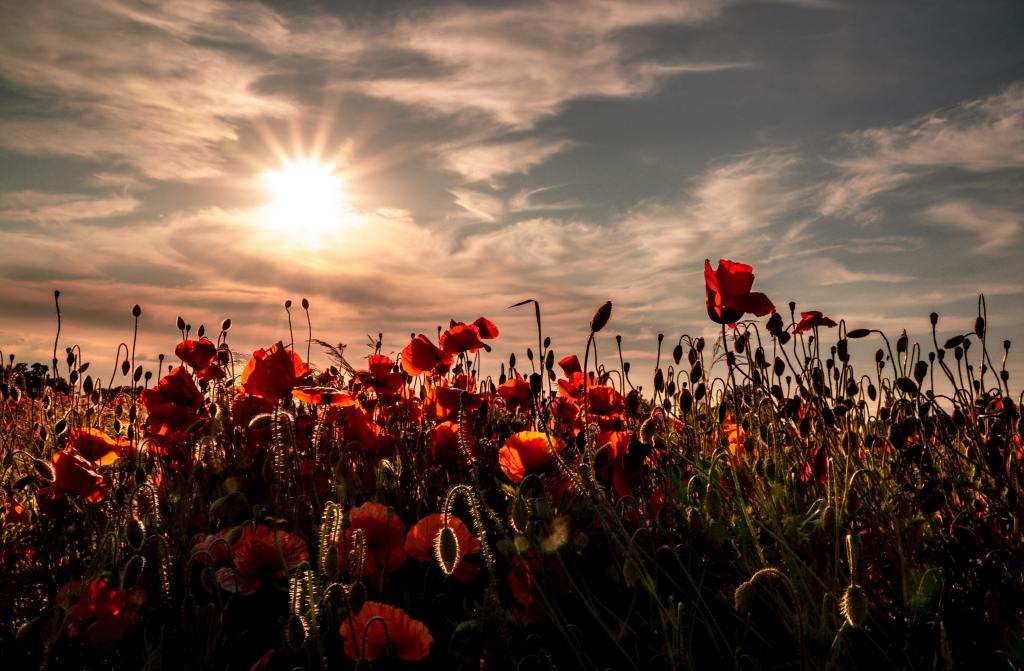
I was taught not to respect and to love but to fear and to uphold an unquestioned version of history. It is more important now, than ever, to ensure that freedom does not allow remembrance to degenerate into a blood curdling, wall-splattering, mindless social media campaign to promote war, partisan politics and aggression as a means of settling international, civil or personal dispute. I wear my poppy with a knowledge that it does not symbolise my preference for militarism or the use of force but it respects all those who were sent to war by the leaders of our country, whether they wanted to fight or not, and who never returned. They were mostly like me – ordinary people, from ordinary backgrounds. In reality, they had no say in how the powers-that-be decided to dispose of their lives. But I know now that they were extraordinary and that they are worth more than a passing thought from me. Wearing a poppy is a statement of my conviction to recall the past horrors, which took their lives, in such a way as to ensure that future horrors can be avoided.
No-one can ‘remember’ what was not personally witnessed and so children, whose current reality is more than a little scary, need not to be indoctrinated with an indoctrinated view. They need an opportunity for their questions to be answered. Wearing the poppy does not imply my support for those whose failures and illusions were often the cause of conflicts in which innocents died or were maimed. It is the opportunity for me to reaffirm core human values and moral sensitivity.
One of the most confusing messages about remembrance that I’ve ever heard was conveyed to a group of students in an assembly. I am certain that the intention was coming from a place of respect, and from a heart full of love – for the students, for their colleagues, for their ancestors who had been directly involved in fighting in both world wars, for humanity. But it was misguided.
There were more than one thousand students gathered, aged from eleven to eighteen. They were required to enter in silent respect, to sit in silent respect, to leave in silent respect. There was no opportunity to ask questions and the assembly was delivered in a didactic manner from a sage on the stage. They were required to listen, there was no checking that they had processed the information. The lead was delivering a message that was replicated from the assemblies that they had attended in their own childhoods. One message was very loud and clear – in this sixth generation since the war, we should remember them.
The other message was also clear – we should actively seek peace and aim for it across the world. We should be so grateful that these young men and women gave their lives so that we could be free. We should respect diversity, we should increase tolerance, we must eradicate the hatred and fear that led to these horrific wars, we should spread the word of love and be so grateful for our freedom that we would never be in the position again to have to shed blood to protect world peace.
And then came the message that was so confusing. We should want peace so badly that we should be prepared to fight for it, as did our ancestors. How can we expect an eleven year old, even an eighteen year old to process the very confusing messages that we convey? When we engage in violence, when we use fighting talk, we cannot expect peace. The rage-reaction cycle can only lead to greater conflict. We cannot fight for peace to experience peace.
What we can do is, through remembrance, contribute resources towards nurturing humanity, we can work to eradicate poverty, we can aid compassionate, empathetic and sustainable development. We can write history forward so that by ‘remembering’ we take steps greater steps for humanity.
At the going down of the sun and in the morning, we will remember them.
And so, we can create our own, new normal, where feeling blue is bathed in serenity and the colour is celebrated for its brilliance. It is, after all, the colour of clear skies, of the ocean, of forget-me-nots.
Ever thought about how the language we use and the connotations that we draw from it are not always helpful to our mental stability and feelings of well-being? I wrote a few weeks ago – in one of my river blogs – about how we can alter our thoughts to become a life raft, on which we ride and surthrive the rapids.
These times are increasingly challenging but they will change and most of us know the reasons why we may currently be feeling out of control. But we aren’t totally at the mercy of the times. Here is an extract from my book, ‘The Will To Surthrive‘ which helps to show how we can feel blue and still revel in it.
2020 will be forever etched in history; well, for as long as the planet survives. As forever etched as 911. I spent some time with a group of students on a trip to New York and we visited Ground Zero. One could not help but weep at the sight of so many names etched on the memorial. Futile loss of life. It was even more emotional when we visited the Ground Zero Museum Workshop where the incredible photograph of Gary Marlon Suson was displayed. (Suson) He was the official photographer, the only photographer, permitted into the ruins of the twin towers, and he was charged with documenting the recovery. His image of a single scorched page from a Bible which had survived ferocious fire, which he saw perched on top of rubble, shows the verse from Genesis 11: The Tower of Babylon. The original owner had obviously highlighted sections that were pertinent to him or her; now the only words that were clearly visible were, “Let us understand each other.” Many of the same students who accompanied that trip were young Arabs who also journeyed with me to Auschwitz, in the following year. One of the more outspoken boys, a charismatic, macho and influential young man, also wept and said that every man, woman, and child, everyone from every creed, should visit this place once in a lifetime. It had changed his perspective and his life. And, in my final year of accompanying the history trips, we stood listening to Wilfred Owen’s stark poem, “Dulce et Decorum Est” in the trenches of northern France, which highlights that it is anything but sweet or seemly to die for a country in such inhumane conditions and then we wept some more as we stood in a graveyard, a sea of white crosses eternally commemorating the young men of the allies, who had lost their lives to our left, and to our right a pit, unmarked, measuring about one tenth of the size of one Ground Zero memorial pool, in which were thrown the bodies of thousands German dead. They were sons, brothers, husbands, fathers too and, equally, victims.
I have watched and observed while people who I love really tear themselves in two with the dichotomies of ideology, or religion, an immovable dogma, whilst also deepening the chasms between their beliefs, their values and their lifestyle. You have read and witnessed how I have done that to myself, too, for all those reasons we have already examined. Justifying some of the tragic choices I have made with a fogged-up story.
So the first, perhaps the only way through this is to work on leading ourselves more appropriately. I know that without the adornment, of masks and costume and delusions of the stories I tell myself to justify why I do something that I know is not in accordance with my own values, I will be at peace with myself. And when I am at peace with myself, I have a greater chance of being at peace in, and with, the world. As Shakespeare also states, in a speech littered with the very best guidance, from Polonius to his son, Laertes, as he heads out into his own independent life, “This above all: to thine own self be true.”
I’m going to start by being conscious, avoiding blame and finger pointing, and trying to catch myself if I do, and then I will focus on living my values. I love the famous Madison quote, “What is government itself, but the greatest of all reflections on human nature? If men were angels, no government would be necessary. If angels were to govern men, neither external nor internal controls on government would be necessary.” I will not focus on the speck in my brother’s eye, cheerfully ignoring the blooming great log that is in my own. I will not take the superior high road, criticising others, or by pretending that I have all the right answers. I don’t but I do have a choice in how I live and love my life.
If we focus on bringing, to ourselves and those around us, peace, thinking about what is right, not who is right, then we can live in peace. [1] Always try to be kind, to give empathy and trust without prejudice or resentment; forgive yourself when you get this wrong and find the grace to forgive others when they do; be creative and aim to keep learning and not let yourself be lazy. And give generously, your time, your attention, your charity. According to Maya Angelou, no-one has ever become poor from giving.
Then, and only then, will I be able to wear my crown a little straighter and mingle, in the valley of both beautiful women and Kings. Let’s party when this lockdown is done together wearing our crowns and our tiaras!
[1] I like CS Lewis on this: “Humility is not thinking less of yourself, it is thinking of yourself, less.” Nor is it putting yourself last.
In a week where there is yet more ugliness and fear splashed across the world’s media, I will leave this with you, as my last blog for this round, inspired by artists and their take on love.
This 16th century painting is accompanied by much debate, speculation and little known fact. It’s anything from a satirical representation of ‘cougars’ to a real portrait of a woman known as Margaret, Countess of Tyrol, claimed by her ‘enemies’ to be ugly, through to a sufferer of Paget’s disease. Whoever was the artist’s muse, the general consensus is that she is ugly. The painting is titled ‘The Ugly Duchess.’
But ugliness isn’t the absence of perceived beauty; it’s not the opposite of beauty either. Believe me, this image of the duchess is not ugly!
Ugliness is unkindness. Ugliness is a disease that is spreading like a pandemic where it is increasingly difficult to lead an inclusive, loving and authentic life. A life where we are out of touch with our inner feelings, desires and aspirations. A life where our heads, hearts and souls are misaligned. A life where we often lack respect and compassion for the feelings and most basic rights of others.
Ugliness is a life unfulfilled, one which does not meet the promise of what a human life can be. It is when governments and leaders justify or ignore poverty, slavery, discrimination. It is when society or culture condemns a life lived as a man, when one is really a woman; ugliness is life spent in silent bitterness, when there is a humane voice which longs to sing out love and unity; ugliness is educating a child to believe that they are less than something – less than clever, less than creative, less than an individual, less than a community, less than love. It is not being able to comfort the dying with the healing balm of human touch; it is not being able to respect that we are all one.
Ugliness is lack of respect and compassion for the earth and all its inhabitants. It is ravaging our natural environment and ecosystems to satisfy human greed. Whilst there are those that argue that Earth has always suffered from the actions of humans, now we are leaving the deepest and most damaging of scars and it is the ugliest of excuses.
Ugliness is when we lose our sense of individual responsibility – when we are reflected in a mirror that persistently points out that we need to transform or risk oblivion. It is deep shame when the mirror reflects back an image of humanity that is degrading or humiliating, selfish and egocentric and still, we turn away or worse, we preen and pimp.
Can we choose not to be ugly? To treat each other with love and respect? To seek the beauty in everyone and everything? Do we have a choice not to denigrate or belittle anyone – even those we see as our opponents? Absolutely. We have a choice.
We are all human. If we choose to put people down as a matter of routine, that’s ugly. When political debate has deteriorated to nothing but name-calling, and negative labelling, that’s ugly. We can appreciate beauty and decency only when we expect it from others and give it ourselves.
As yesterday’s news again confirmed, we cannot completely control the decisions nor culture that surrounds them but we are the ingredients that make them up. When we remember our roles in shaping them, we can promote the values and the beauty that we admire in them.
We need to unfix our ideas of ugliness and beauty. We must search for inclusive values and beauty, even in that which we find unappealing. Instead of being appalled at the current plague of ‘ugliness’ we should elevate humanity, with a more dignified vision and wider concept of what we consider beautiful.
Whatever the motive of Matsys, I don’t think it was spurred on by kindness. But we can look at this image now and from it, we can discover profound and important insights into the world around us – reflections that might make the hideous become beautiful.
If I compare myself to the notion of beauty and love that was depicted by Botticelli in his 15th century painting “The Birth of Venus” I am forever doomed. The only faint similarity is that she and I are both white, and even that is debatable, as her unblemished complexion and milky skin do not mimic my sun-pocked, uneven tones. And right there, the similarity ends. Venus is classically ethereal, gentle and docile, her expression serene and faraway wistful. She is angelic, illuminated by a soft, delicate light, innocent, physically able, and aligned with a gentle vision of nature. In my media indoctrinated head, she is the pinnacle of femininity. She is desirable. Today, I look at her and think, she’s just about everything that I am not, nor ever have been. Yet, I think I’d still like to be desired…
I wanted to know more about the muse who had inspired Botticelli’s vision – and was fascinated to know that Simonetta Cattaneo Vespucci was a married noblewoman from Genoa; a tender age of twenty two when Botticelli was believed to have fallen in love – or lust – with her. She died before she reached the age of twenty three, and so enraptured by her charms was he, that he continued to paint her from memory, even ten years after her death. So enraptured by her charms was he that he also, upon his death, arranged to be buried at her feet! Botticelli – his nickname translates to ‘little barrel’ – had never married.
Botticelli’s enigmatic Primavera also depicts her, possibly in every one of the three muses on the left, and the three goddesses on the right, and certainly, in the figure of Venus, front and centre. They were all made in Simonetta’s image, and Botticelli’s obsessive attention to detail with the figures and more than two hundred different, identifiable flowers – means this painting was a labour of love in every sense.
But I am troubled that her traditional ‘norm’ of beauty is not only restrictive, but frequently hurtful and often predatory. I wonder if it was to her too? Recently, I watched, on Gogglebox, the reactions of men – and women – to a contemporary embodiment of Venus, the media-labelled ‘Goddess’ that is Nigella. She, too, is everything that I am not.
She is often lambasted for her lascivious-inducing commentary and she always responds with denial and innocence, absolutely insistent that it is not her intention to use sexual innuendo or to seduce and intoxicate in the manner that comes across. Yet it has become a pop-culture reference, parodied by shows such as Modern Family and even Mary, on the said GB episode, mimicked her. The reaction of Giles, Mary’s husband, speaks volumes!
In an interview, when accused of the purposeful use of her sexuality and euphemistic suggestion, Nigella countered that it is the careful and clever editing by the production company. ‘You have this way of saying things,’ the male interviewer suggested. ‘I have this way of people projecting things on me!’ Nigella hit back, ‘I’m so not the kind of person who would do that intentionally.’
The production company reminded me of the Medici brothers, who commissioned Botticelli’s daring celebration of human desire. They ruled Florence and in such patriarchal settings, and in some prevailing cultures, women were/are considered to be carnal — the deliberate temptress to men who were thought to be rational and moderate but for these women. It is a more ‘modern’ notion that men are considered more sexual than women, and that they are unable to control their sexual desires in ways that women can. Is this a function of patriarchal norms, requiring a woman’s sexuality to be only in the service of her husband, or art patron, or lover or pimp, rather than as an integral part of her humanity? This notion has demanded that women restrain their sexuality for so long, that as a society we’ve started to believe it is an easy and natural thing for us to do. Expecting Nigella to put a lid on her inherent sexuality is expecting her to deny her actual self.
Think of the damage to her soul!
Then, I remember the damage to mine. I want to be desired; I think that many women do but with this can come either the feeling of entitlement and of possession or the feeling that somehow we demean ourselves! The reaction of those watching her on Gogglebox screamed, “Women such as you are in the world for men’s pleasure and enjoyment; you are exploiting your sensuality” and that is something that few women enjoy because it’s objectifying. Let me tell you, it’s even more objectifying and humiliating when you are not considered within the realms of the classically beautiful. Our physical selves are as intrinsic to who we are as our emotional selves. They cannot easily be separated from us and our deepest soul.
It’s the whole package that makes us beautiful – not a face, not a voluptuous body. I want to be seen and valued for myself; I don’t want to be a hawked around like a commodity. And then, I remembered Warhol’s quite obsessive fascination with the pop art print of the face of Venus, reproduced time and again and contemplated how it is not only famous artwork, but also women and beauty that can be as commoditised as a can of soup!






 Latansani