
I had to have a calming conversation with a family member just yesterday; he is in a partnership – a civil partnership actually – but he has become more dependent on his partner recently due to failing health. It’s interesting because, back in the days when civil partnership was ‘new’, they didn’t consider making any personal vows as such and simply repeated the legalities…something along these lines: P and C are here to formally pledge their love, to be united in a partnership, and to offer each other the security that comes from promises sincerely made, and faithfully kept. They are choosing to make a commitment to each other for the rest of their lives.
They’ve been together in a solid relationship for more than fifty years! As you can imagine, with the frailty that can come with illness and old age, it’s easy to get caught up in overthinking about what might be (or, in his case, also what might have been). My brother – P– certainly overthinks; he is a classic example when it comes to catastrophising – the act of thinking the absolute worst when a problem occurs. Perhaps if they had considered writing their own promises and commitments, he might have been more aware about trying to control his thought patterns. If you hold with the neuroscience and appreciate the brain’s plasticity, or with spiritual practices such as meditation and yoga, it is possible to control thought. And taking the conscious decision to be with someone for the rest of your lives requires some conscious thought!
Here is yesterday’s illustrative scenario:
P wasn’t feeling well in the morning so instead of their usual stroll into town, he took a rest and C went off to fetch provisions and do some errands. My brother dozed, but when he woke up to find his partner hadn’t returned, what do you think was his first thought? That C had met a mutual friend and had an impromptu coffee? That C had missed the local bus that brings him and the heavy shopping bags back up the hill? No…by the time C got back, my brother was pacing up and down, weeping, and contemplating telephoning the funeral director to prepare for a body! He had imagined all sorts – a cardiac arrest, a terrorist attack, a Reginald Perrin type disappearance into the sea.
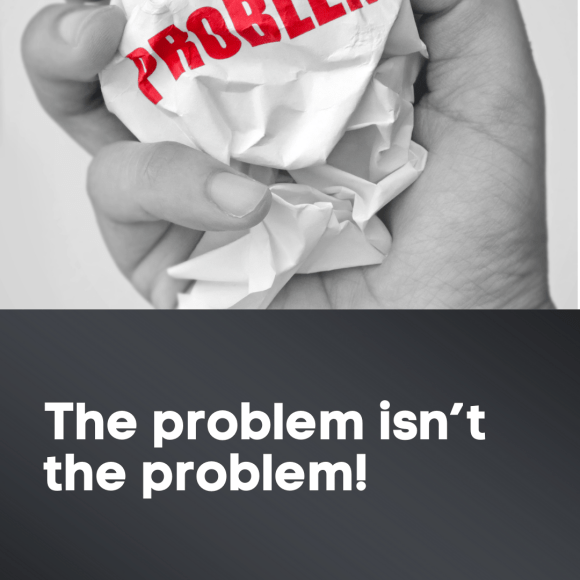
His slightly wild imaginings illustrate how the problem is never really the problem. Rather it’s the way we think that is the real issue.
Relationships and partnerships and the things that go with them, including the planning of weddings and other public events provide ample opportunity for one or the other to get anxious and imagine the worst case scenario. A wedding is a time when we want a perfect day, when everything should be in our control, when nothing must go wrong. That’s a lofty hope because, even with all the planning and preparation or love in the world, we can’t stave off every challenge.
Here are some of the ways that we can avoid catastrophising:
Catch ourselves in the act – as soon as we become aware of what we are thinking, remind ourselves that we have done this before, but we’re still here and things worked out.
Ask ourselves specific questions about the worst thing that could happen and balance it out with the best; we can take mitigating action to aim for joy.
Follow the negative thoughts to see where they lead. At every negative turn, we have the option to choose a more positive outcome, to shift the thinking into taking a different path.
Remind ourselves that we are not our thoughts. They are external – it may seem like they are part of us but if we can separate them from our being, they don’t consume us. An example is: ‘I am useless at reading in public and out loud’ changes to ‘My brain is telling me today that I am useless but I am so worthy.’
Pay attention when things go well and also when previous catastrophic predictions haven’t materialised. We can soon take note when our brains cry wolf and can recognise when we have met challenge and survived.
Look out for tomorrow’s blog to discover some more ways to, live in the now, and avoid catastrophic thinking.
 Latansani